The First Spice Rack: 12 Spices to Start With (And the Gift Set to Avoid)
Pre-filled spice racks are the most gifted and least used item in the kitchen. Twenty small jars, half of them things you will never cook with, all of them stale by the time you open them, in a rack that takes up a foot of counter. Most people are still working through the paprika three years later.
This is a shorter list. Twelve spices and herbs that cover most of what a home cook makes, the order to buy them in, and the one storage rule that keeps them tasting of anything. There are no product links on this page.
The twelve to start with
Buy these first: the five you will use weekly
- Flaky or coarse salt for finishing, alongside whatever fine salt you cook with. This is not a spice but it does more for food than anything else on this list.
- Black peppercorns and a grinder. Pre-ground pepper tastes of dust within a month. Whole peppercorns keep for years.
- Cumin, ground. Curries, chilli, tacos, roasted vegetables, hummus. The single most useful spice for everyday cooking.
- Smoked paprika. Adds depth to almost anything savoury, and it makes roast potatoes taste like more effort went in than did.
- Dried oregano. Pasta sauce, pizza, marinades, Greek and Mexican cooking. One of the few herbs that is better dried than fresh.
Then these: the five that round it out
- Chilli flakes. Heat you can control at the table.
- Ground coriander. The partner to cumin in most spice blends. Buying both means you can make your own curry powder.
- Cinnamon, ground. Baking, oatmeal, and a surprising number of savoury stews.
- Garlic powder. Not a replacement for fresh garlic, but it goes where fresh garlic cannot: dry rubs, popcorn, and the outside of roast chicken.
- Bay leaves. One in any soup, stock, or braise. Cheap, and a packet lasts years.
And two to choose based on how you cook
If you cook a lot of Indian or Middle Eastern food, turmeric and garam masala. If you lean Italian, dried thyme and fennel seeds. If you bake, nutmeg (whole, grated fresh) and vanilla extract. If you are not sure yet, wait. The next recipe you cook will tell you.
What to skip until a recipe asks for it
Everything else. Cardamom, star anise, saffron, sumac, allspice, cloves, dill, tarragon, and the rest are all excellent and all specific. Buy them the day a recipe calls for them, in the smallest jar you can find. A spice bought for a recipe you have not chosen yet is a spice that goes stale in the cupboard.
The same goes for pre-mixed blends like Italian seasoning, taco seasoning, and all-purpose seasoning. They are mostly salt and the spices you already own, at a higher price per gram than any of the ingredients.
The one storage rule
Keep them away from heat and light. The rack above the hob, or the shelf next to the oven, is the worst place in the kitchen for spices, because heat drives off the oils that carry the flavour. A drawer, or a cupboard away from the cooker, is right. Airtight jars help. Clear jars in a dark drawer are fine; clear jars on a sunny windowsill are not.
If you take one thing from this page: move the spices away from the stove. That does more for flavour than buying anything.
How long spices actually last
Ground spices lose most of their flavour within a year and are effectively pointless after two. Whole spices, seeds, peppercorns, and bay leaves last three to four years. Dried herbs sit in between, at one to two years. The test is simple: rub a little between your fingers and smell it. If it smells like the spice, use it. If it smells of nothing, replace it, because it will add nothing to the food either.
This is why buying small jars matters. A large jar of ground cumin is not a saving if two thirds of it goes in the bin.
Where to buy
Supermarket jars are convenient and expensive per gram. Bags from an Indian, Middle Eastern, or Asian grocer are a fraction of the price, fresher because they turn over faster, and you decant them into whatever jars you already have. Bulk bins do the same job if you have a shop with them nearby. For a first kitchen, the supermarket is fine; the point is to start with twelve, not forty.
Storing them without a rack
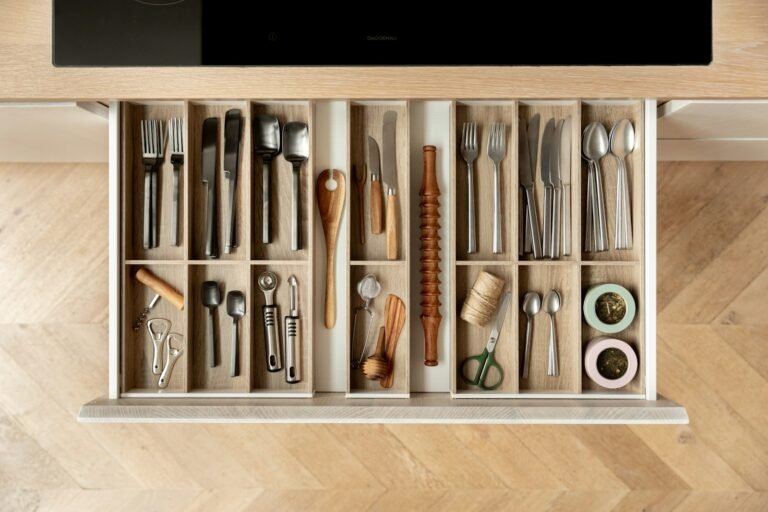
A shallow drawer is the best spice storage most kitchens already have. Lay the jars on their sides or stand small ones upright, label the lids so you can read them from above, and group them roughly by cuisine. It costs nothing and it beats a rotating carousel that hides half the jars at any given moment. Our guide to organising kitchen drawers covers how to free one up.
If drawer space is the problem, a single narrow tiered shelf inside a cupboard door or on a shelf works. What does not work is anything that requires buying matching jars before you can use it. Fill the jars you have first, and buy the rack when you know what fits.
A reasonable routine
Start with the first five. Add the next five over a month of cooking. Buy anything else when a recipe asks. Keep it all in a drawer away from the hob, in small jars, and smell-test anything older than a year. That is a spice cupboard that costs a fraction of a gift-set rack and actually tastes of something. It is also the answer to the spice rack question in our first kitchen essentials list.