Best Food Storage Containers: Pick One System and Stop (5 Sets, 1 to Avoid)
As an Amazon Associate I earn from qualifying purchases. Product links below go to Amazon. Full disclosure.
Part of our meal prep gadgets guide.
Food storage containers are the item people own the most of and like the least. The cupboard of mismatched lids is a cliche because it is true. The cause is almost always buying sets on impulse, one size at a time, from whichever brand was on offer, so nothing stacks and nothing matches.
This guide is the opposite approach: pick one system, buy it once, and stop. It covers the three decisions that matter, five sets that we would actually buy, and the container everyone owns and should stop buying.
The short answer
- Buy this for most kitchens: the Pyrex Simply Store 12-pack. Glass bases you can heat in, lids that all fit, and it will still be in the cupboard in ten years.
- For packed lunches and leaking bags: Rubbermaid Brilliance. Genuinely leak-proof, clear as glass, and light.
- Cheapest that works: deli containers. One lid fits every size, they stack, and losing one costs nothing.
- Skip: the 40-piece bargain set with six lid shapes. It is the cupboard of mismatched lids in a box.
The three decisions
1. Glass or plastic
Glass does not stain, does not hold smells, goes from fridge to oven, and you can see what is in it. It is heavy and it breaks if dropped. Plastic is light, cheap, and fine for the freezer and lunch bags, but tomato sauce stains it orange within a month and it eventually warps in the dishwasher. Most kitchens want glass for leftovers at home and a few plastic for lunches that travel. Buying only one type is how people end up unhappy.
2. One lid system
This is the whole game. Every container in your cupboard should use the same lid design, ideally with as few lid sizes as possible. That means buying from one range and staying in it. The best ranges use two or three lid sizes across all their containers, so any lid within reach fits something.
3. Rectangular, not round
Rectangles fill a fridge shelf edge to edge. Rounds leave gaps that add up to about a quarter of the space. Rectangular containers also stack without sliding. The only round containers worth having are deli tubs, because they nest inside each other when empty, which is a different kind of space saving.
The five we would buy
1. Best for most kitchens

Six glass bases in three sizes with six matching lids. The glass goes in the oven, the microwave, the freezer, and the dishwasher, and it never stains. Pyrex has made the same shapes for decades so replacement lids are easy to find. The lids are not leak-proof, which does not matter for a fridge and does for a rucksack.
Best for: Leftovers, batch cooking, and anyone who wants to buy containers once
Why it made the list: The most durable set here, and the one most likely to still be complete in ten years
Keep in mind: Heavy. Not the set for packed lunches.
2. For batch cooking

The same range in the big sizes: containers that hold a whole batch of chilli, a tray of roast vegetables, or a family lasagne. If you cook in quantity on Sunday, these are the ones you reach for, and the lids match the 12-piece above.
Best for: Batch cooks and families
Why it made the list: The same system as the 12-piece, just larger, so it all stacks together
Keep in mind: Big glass is heavy glass. Two of these full is a workout.
3. Best leak-proof plastic

The plastic set for people who hate plastic. It is crystal clear rather than cloudy, it does not stain the way ordinary polypropylene does, and the latching lids are properly leak-proof, so soup in a bag stays in the container. The vents let you microwave with the lid on.
Best for: Packed lunches, commuting, and anything that travels
Why it made the list: The only plastic here that stays looking new
Keep in mind: More expensive than glass for the same volume. Buy it for the lunches, not for the whole fridge.
4. Cheapest that works
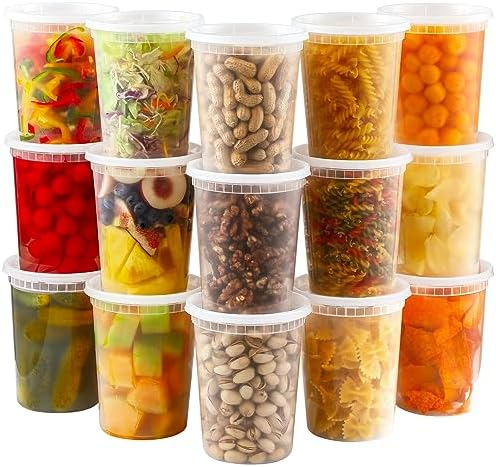
The containers restaurants use. Every size takes the same lid, they nest when empty, they stack when full, and they are cheap enough to give away with leftovers and not want back. Freezer safe, dishwasher safe on the top rack, and the quart size is exactly right for a batch of stock or a portion of soup.
Best for: Freezer stock, sending food home with people, and the overflow when the good sets are full
Why it made the list: One lid for everything, at a price that makes losing one irrelevant
Keep in mind: They are not built to last forever and they are not pretty. That is the point.
5. For the fridge shelf

Four big rectangular glass containers with locking lids, sized to fill a fridge shelf edge to edge. Good for salads that need to stay crisp, marinating, and the week’s prepped vegetables. Glass base goes in the oven; the lids are gasketed so they seal better than the Pyrex ones.
Best for: Fridge organisation and meal prep in bulk
Why it made the list: The best size for turning a messy fridge into rows
Keep in mind: The lids have removable gaskets, and the gasket is where things get grimy. Pull it out and wash it every few weeks.
What to skip
The 40-piece bargain set. Twenty containers in eight sizes with six lid shapes. It looks generous and it produces the exact cupboard everyone complains about. Two lid sizes across the whole set is the number to look for, not forty pieces.
Reused takeaway tubs. Free, and fine for a week. Then the lids crack, the plastic stains, and none of them stack with each other. Replace them with deli containers, which are the same idea done properly.
Containers with built-in compartments. The compartments are never the size of the thing you want to put in them. Use two containers.
Frequently asked questions
Can I put glass containers straight from the fridge into the oven?
Not straight from cold. Let them sit on the counter for twenty minutes first, and never put them on a hot hob or under the grill. Sudden temperature change is what cracks glass.
How many containers do I actually need?
For one or two people, six to eight in two sizes covers everything. For a family that batch cooks, a dozen plus a few large ones. If your cupboard has more than that, some of them are not being used.
Are plastic containers safe to microwave?
Ones labelled microwave safe are, for reheating. Avoid microwaving fatty or oily food in plastic, which gets hotter than water-based food and can warp the container. Glass sidesteps the question entirely.
What to buy first
The Pyrex 12-piece, then a sleeve of deli containers for the freezer. That is a complete system for most homes. Add the Rubbermaid only if you carry lunch every day, and the large glass set only if the fridge is where the chaos is.
Once the containers are sorted, the other half of meal prep is the tools that get food into them, which is what our meal prep gadgets guide covers. And if the cupboard the containers live in is the problem, start with organising a small kitchen.