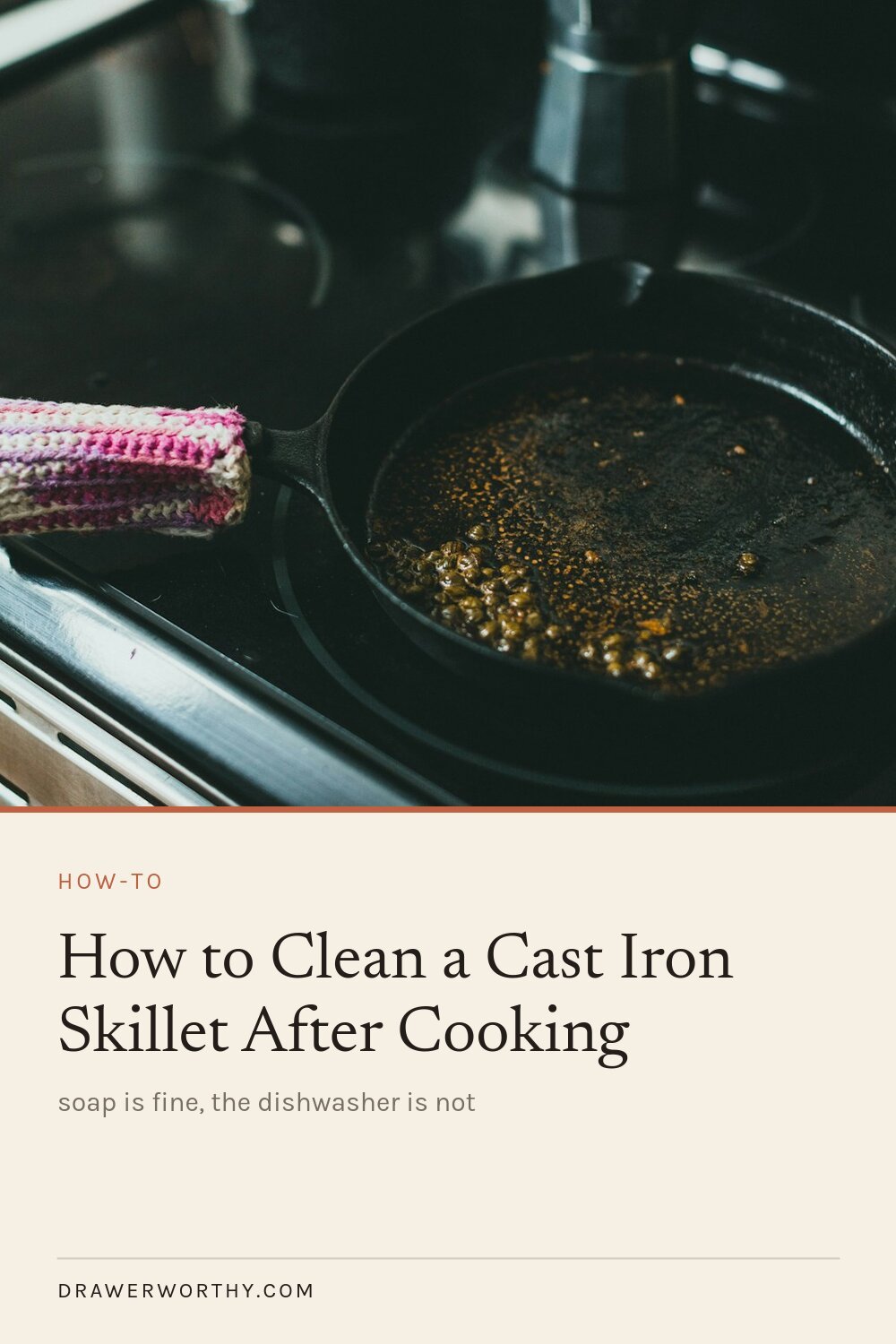
How to Clean a Cast Iron Skillet After Cooking (Soap Is Fine, the Dishwasher Is Not)
Cleaning cast iron is where most of the myths live. Never use soap. Never let water touch it. Scrub it with salt. Some of this was true fifty years ago, when soap contained lye. None of it is true now. A cast iron pan is cleaned in about ninety seconds with hot water, a brush, and a drop of washing-up liquid if you want it, and the only rule that actually matters is the last step.
This guide covers the routine for everyday cleaning, what to do about stuck-on food and rust, and the three things that genuinely damage a pan. It follows on from our guide to seasoning a cast iron skillet. There are no product links on this page.
The ninety-second routine
1. Clean it while it is still warm
Not hot, warm. Food releases from a warm pan far more easily than from a cold one, and you skip the soaking that people think they need. If the pan has gone cold, run it under hot water for a few seconds to bring it back.
2. Hot water, brush, and yes, soap if you like
Run hot water into the pan and go over it with a stiff brush or a plastic scraper. A drop of ordinary washing-up liquid is fine. Modern dish soap is a mild detergent, not lye, and it cannot remove polymerised seasoning, which is a hard coating bonded to the iron, not a layer of grease. What it does remove is the food and the loose oil, which is what you want gone.
What you should not use is anything abrasive as a habit: steel wool, scouring pads, or the rough side of a sponge. Those will scratch the seasoning over time. Keep them for rust, below.
3. Dry it on the hob
This is the step that matters. Wipe the pan with a towel, then put it on a burner over medium heat for two or three minutes until every trace of water has gone. Cast iron is porous and a towel alone leaves moisture in the surface. Water left in the pores is how rust starts overnight.
4. Wipe with a drop of oil
While the pan is still warm, put a few drops of any cooking oil in it and wipe it over the whole cooking surface with a paper towel, then wipe again as if removing it. The pan should look dry with a faint sheen. That thin film protects the surface in the cupboard and bakes into the seasoning the next time you cook. Too much oil goes sticky, so wipe it back.
That is the whole routine. Ninety seconds, done while the rest of the dishes are soaking.
Stuck-on food
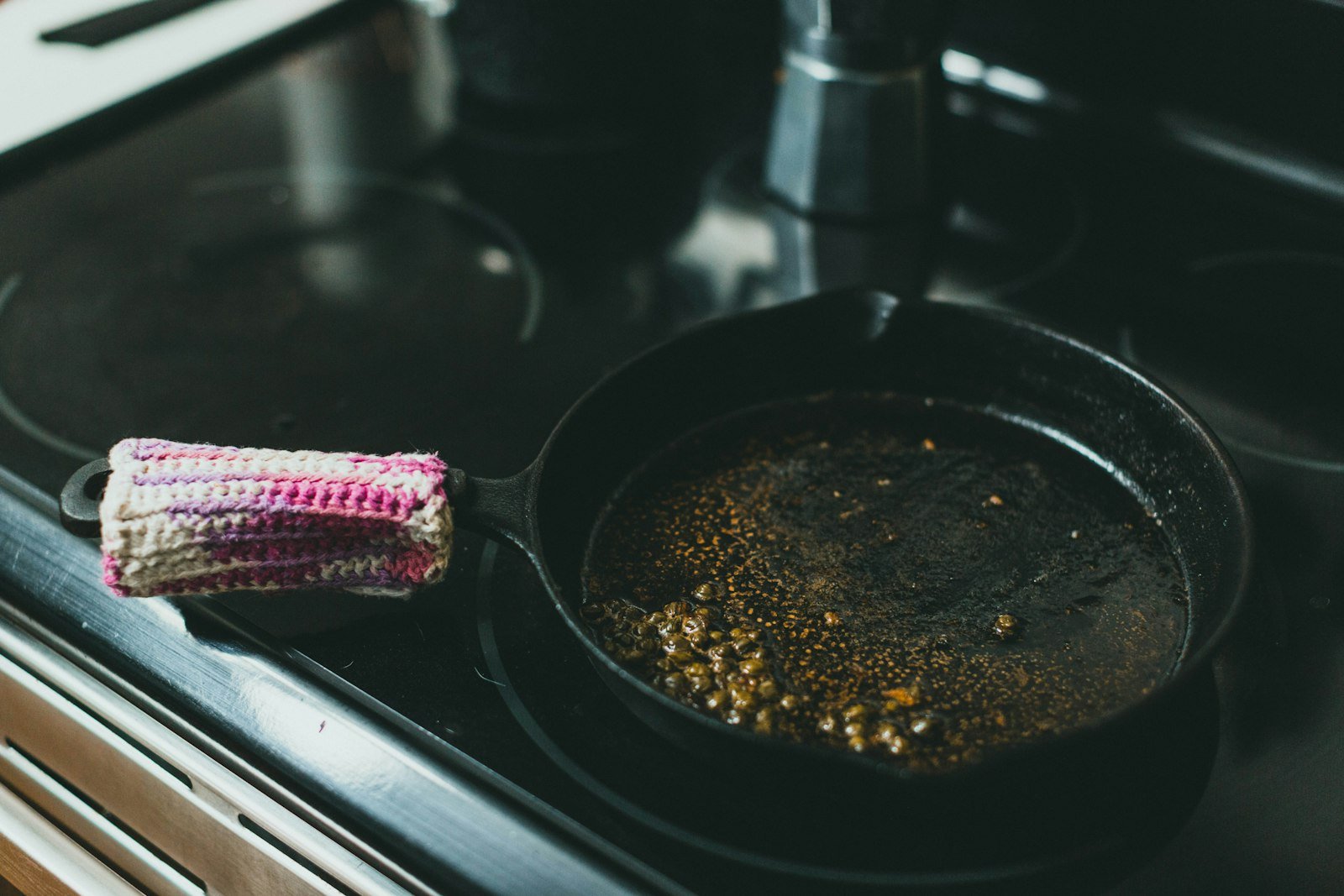
For the eggs that welded themselves to the pan, or the sugar from a glaze: put a centimetre of water in the pan and bring it to a simmer on the hob for a minute or two. Everything lifts. Pour it out, scrape with a wooden spatula, and carry on with the routine above. This works far better than soaking, which is slow and leaves the pan sitting wet.
Coarse salt as a scrub does work, and it is gentler than steel wool: a tablespoon of salt and a little oil, rubbed round with a paper towel, lifts most stuck residue. It is a good trick for camping or when the pan cannot go near a tap. At home the simmer method is faster.
Rust
Orange spots mean the pan was put away damp. Small patches: scrub them off with steel wool or a scouring pad, rinse, dry on the hob, and do one round of seasoning in the oven so the bare metal is covered. The pan is not ruined; it just needs its coat back.
A pan that is orange all over, from a garage or a car boot sale, needs stripping and reseasoning from scratch. Our seasoning guide covers the full process, including the vinegar soak for heavy rust.
Sticky or gummy surface
This is not dirt. It is oil that was left on too thick and never fully polymerised, usually from the after-cooking wipe. Scrub the sticky patch off with salt and a paper towel, then next time wipe the oil back more thoroughly. The pan should never look wet when it goes in the cupboard.
The three things that actually damage a pan
The dishwasher. An hour of hot water and strong detergent, then sitting wet. It strips seasoning and starts rust in a single cycle. Nothing else on this page comes close.
Leaving it to soak. Twenty minutes in the sink is enough to start rust in the pores. If food is stuck, simmer water in it for two minutes instead.
Thermal shock. Cold water into a screaming hot pan can warp it or crack it. Let it cool to warm first. Warm, not hot, is also when it cleans easiest, so this rule costs nothing.
What about enamelled cast iron?
A Le Creuset or a Lodge enamelled pot has a glass coating and none of this applies. Wash it like any other pan, with soap and a soft sponge. It can soak, it can sit wet, and most makers say it can go in the dishwasher though the enamel dulls over time. Avoid metal utensils and abrasive pads, which scratch the enamel, and avoid the thermal shock rule above, which applies to enamel even more than to bare iron.
A reasonable routine
Warm pan, hot water, brush, soap if you like. Dry on the hob. Wipe with oil, wipe again. Never the dishwasher, never a soak, never cold water into a hot pan. A pan looked after this way gets better every year and outlives every non-stick pan you will ever buy, which is why cast iron is on our list of kitchen gadgets that actually save time despite being the least gadgety thing in the kitchen.