Best Kitchen Organization Products (And the Trend to Skip)
As an Amazon Associate I earn from qualifying purchases. Product links below go to Amazon. Full disclosure.
Part of our complete kitchen gadget guide.
Kitchen organisation is less about buying containers and more about matching the right storage to the right mess. These twelve products target the specific places that fall apart first, and they are ordered by how much difference they make rather than how good they look in a photograph.
One warning before anything else: measure the space twice before you buy. Professional organisers say this more than they say anything else, and for good reason. A turntable sold as eleven inches will not fit a ten inch cabinet, and returning bulky storage is a genuine nuisance.
The short answer
- Start here: adjustable drawer dividers in your busiest drawer.
- Biggest space gain: stackable shelf risers, which roughly double a cabinet shelf.
- Fixes the worst cupboard: a pull-out sliding basket for the deep cabinet you cannot see into.
- Skip: decanting your whole pantry into matching jars. Reasons at the bottom.
How these were chosen
Storage products were judged on how they behave when full, because almost everything works well empty. The failures are consistent: wire turntables that let bottles topple as they spin, dividers that slide around the moment you open the drawer, and pull-outs whose runners bind under weight.
Preference went to items that grip, mount, or stack securely rather than simply sitting somewhere and hoping. Visibility mattered too. The reason things get lost is not usually lack of space but lack of sight lines, which is why several picks here are about seeing what you own rather than fitting more in.
1. Adjustable drawer dividers

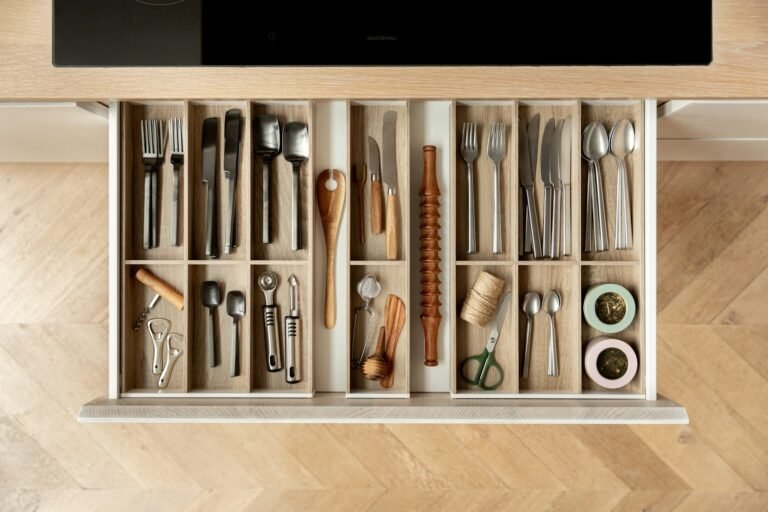
The busiest drawer in the kitchen is usually the messiest, and dividers fix it for less than the price of lunch. Spring loaded or expandable dividers push against the drawer walls and hold position, which is the whole difference between a system that lasts and one that slides into a heap the third time you open it. Start with the drawer you open most, not the worst one. Fixing a space you use daily gives you an immediate reason to keep the habit going.nnBest for: Cutlery, utensils, and the drawer that has become a pilennWhy it made the list: Cheapest possible fix for the most frequently used space in the kitchennnKeep in mind: Measure the drawer interior, not the front panel. Many drawers narrow toward the back and a divider sized to the opening will jam.
2. Stackable shelf risers

A cabinet shelf usually wastes half its height, because plates and tins are short and the shelf above is far away. A riser puts a second level inside that dead air and roughly doubles what the shelf holds. It is the single largest capacity increase available without renovating anything, and it works in cupboards, pantries, and under the sink.nnBest for: Small kitchens, crowded cabinets, and anyone short of shelf spacennWhy it made the list: It converts wasted vertical space into real storage for very little moneynnKeep in mind: Check the height of the tallest item you want underneath before buying. Risers that are slightly too tall make the shelf unusable rather than better.
3. A pull-out sliding basket

Deep cabinets are where things go to be forgotten, because reaching the back means emptying the front. A sliding basket on runners brings the whole contents out to you, which turns an unusable cavern into ordinary storage. Professional organisers recommend these more than almost anything else, and this is why: it fixes the specific cabinet everyone has and nobody uses properly.nnBest for: Deep base cabinets and under-sink areasnnWhy it made the list: It solves visibility and access at once, which is the actual problem with deep storagennKeep in mind: Check the runner mechanism glides smoothly and will not rust, particularly under the sink. Cheap runners bind once loaded.
4. A sturdy lazy Susan turntable

Corner cabinets have a dead zone that swallows jars and never returns them. A turntable makes that space reachable by bringing the back round to the front. Choose a solid plastic base rather than a wire one, because wire versions let bottles tip over as they spin, which is the most common complaint about the cheap ones.nnBest for: Corner cabinets, oils and vinegars, sauces and jarsnnWhy it made the list: It reclaims a space most kitchens have written off entirelynnKeep in mind: Measure cabinet depth carefully. Turntables come in sizes from around eleven inches upward and an upper cabinet may only be ten inches deep.
5. An over-the-door pantry organiser
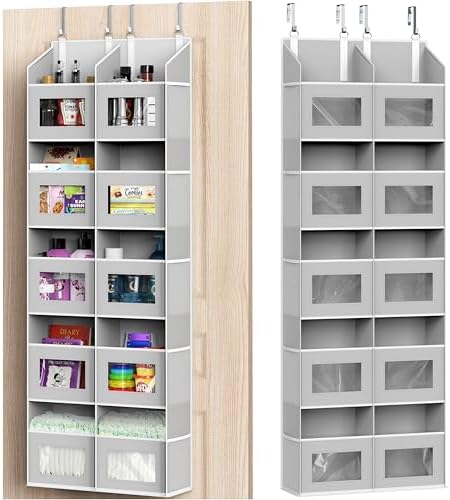
The back of a pantry or cupboard door is completely unused in most kitchens, and a rack of shallow baskets there holds spices, tins, bottles, and the small awkward items that do not belong anywhere. It is the fastest way to add storage without giving up any floor or shelf space at all. Look for powder coated metal rather than plastic, since these carry weight all day.nnBest for: Pantries, small kitchens, and homes with no spare shelfnnWhy it made the list: It creates storage from surface area that was doing nothingnnKeep in mind: The door has to close afterwards. Measure the clearance between the door and the nearest shelf before buying.
6. A tiered spice step shelf

Spices fail not because there is no room but because the jars at the back are invisible, so you buy cumin for the third time. A stepped shelf raises each row above the one in front, so a whole cabinet of spices is legible in one glance. Reviewers describe exactly this: being able to see every jar without pulling out the ones in front.nnBest for: Spice cabinets and small jar collectionsnnWhy it made the list: It solves a visibility problem rather than a space problem, which is what actually goes wrong herennKeep in mind: It uses more depth than a flat shelf. Shallow cabinets may not take a three tier version.
7. A stackable can rack

Tins are the worst offenders in a pantry because they stack badly, hide their labels, and roll. A can rack holds them in rows so you can read what you have and use the oldest first, which is where most food waste in a pantry comes from. The stackable versions let you build to fit your shelf rather than buying a fixed unit.nnBest for: Pantries with a serious tin populationnnWhy it made the list: It fixes both visibility and stock rotation, which saves money as well as spacennKeep in mind: Racks are usually sized for standard tins. Tall or unusually wide tins may not sit properly.
8. An in-drawer knife block

A knife block takes up a surprising amount of counter for something used a few minutes a day. An in-drawer block holds the blades separated and protected while giving that counter space back, and it keeps knives out of sight, which matters in a household with small children. It also stops the loose-knives-in-a-drawer problem, which is dangerous and dulls the edges.nnBest for: Anyone with limited counter space or young childrennnWhy it made the list: It removes a large counter object without compromising the knivesnnKeep in mind: It occupies a full drawer, or most of one. In a kitchen with very few drawers that trade may not be worth it.
9. A pot lid organiser
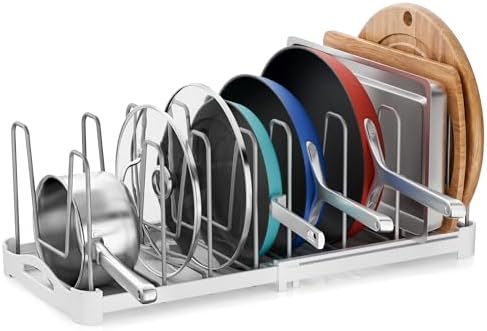
Lids do not stack, do not stand, and slide out when you open the door. A rack that holds them upright and separated turns the worst cupboard in most kitchens into a normal one. Some versions mount inside a cabinet door, others sit on a shelf or inside a drawer, so there is a version for whatever space you have spare.nnBest for: Anyone who owns more than three pansnnWhy it made the list: It solves a problem that has no workaround other than stacking and hopingnnKeep in mind: Adjustable slot versions handle mixed lid sizes far better than fixed ones. Fixed racks only suit a matching pan set.
10. A two-tier under-sink shelf

Under the sink is awkward because the pipes run straight through it, so ordinary shelving does not fit. Expandable two tier units are built around that, with adjustable legs and sections that slide past the plumbing. It is the only part of the kitchen where a purpose built organiser genuinely beats a generic one.nnBest for: Cleaning supplies, sponges, bin bags, and dishwasher tabletsnnWhy it made the list: It is designed around the obstruction that makes this space unusablennKeep in mind: Measure around the pipes, not just the cabinet. Professional organisers name this as the most common measuring mistake people make.
11. Airtight dry goods canisters

Flour, sugar, rice, pasta, oats, and coffee keep better and stack better in square airtight containers than in their original bags, which tear, spill, and waste space by being awkward shapes. Square containers use shelf depth properly where round ones leave gaps. Buy for the staples you genuinely go through, not for everything.nnBest for: Dry staples bought regularly in quantitynnWhy it made the list: Real gains in both freshness and usable shelf spacennKeep in mind: Only worth it for things you buy repeatedly. See the section below on why decanting your entire pantry is a mistake.
12. A wrap and foil box organiser
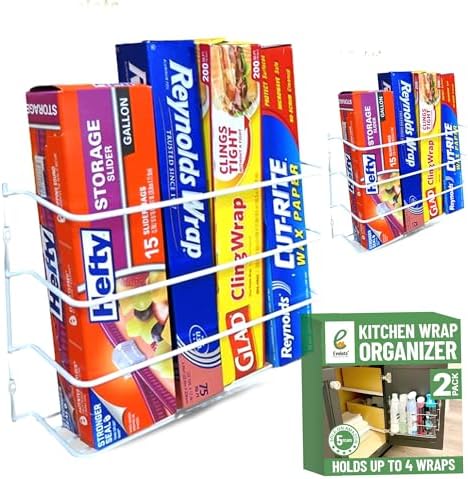
Boxes of foil, cling film, and baking paper are different heights, slide around, and tear at the corners. A rack that holds them upright in a cabinet, on a door, or in a drawer takes thirty seconds to install and removes a small daily irritation permanently. It is the least impressive item here and one of the most consistently useful.nnBest for: Every kitchen with more than two boxes of wrapnnWhy it made the list: It fixes a small recurring annoyance for very little money or spacennKeep in mind: Box sizes vary by country and brand. Check the slot dimensions against the boxes you actually buy.
The one we would skip
Decanting the entire pantry into matching jars
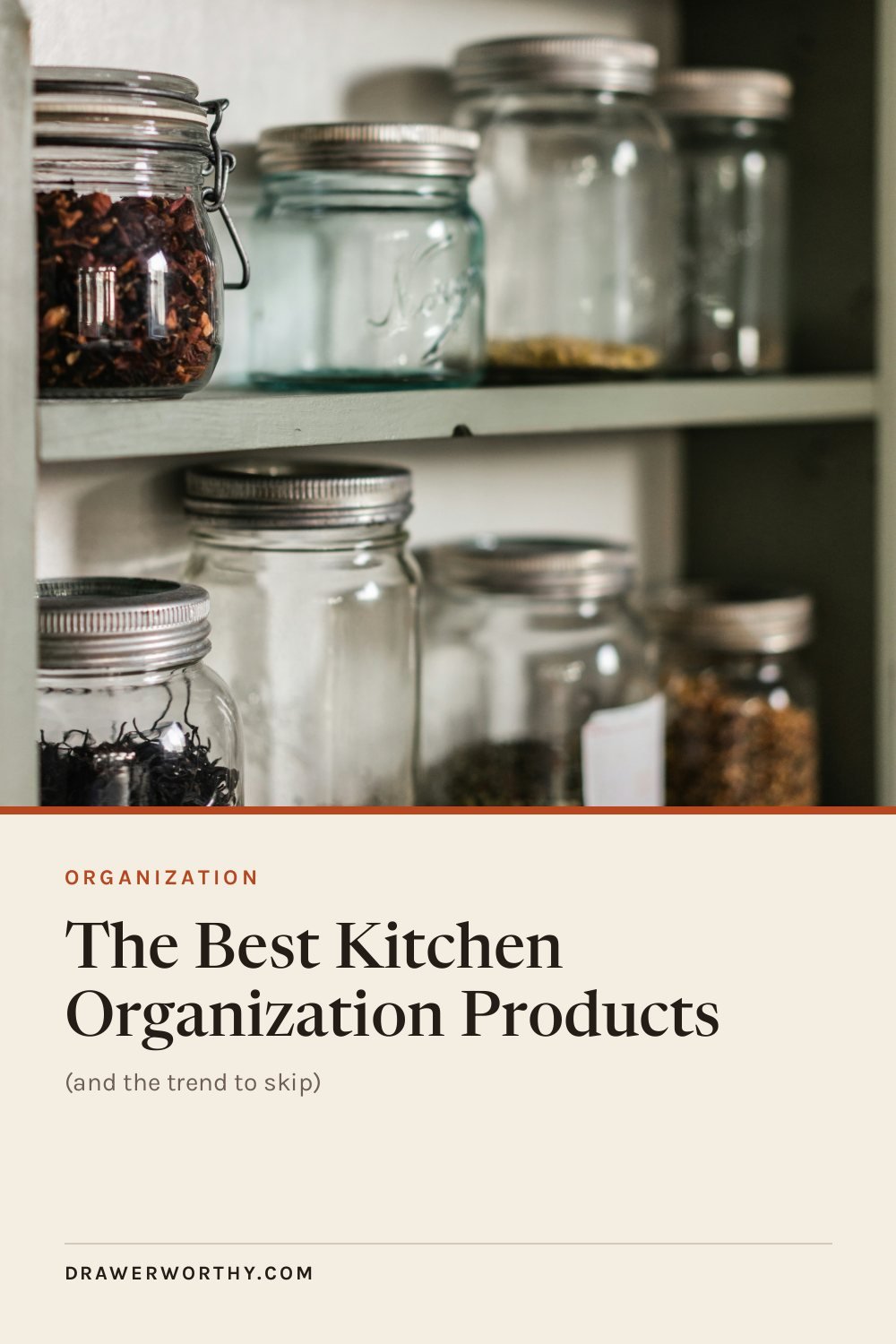
This is the most photographed idea in kitchen organisation and the one most likely to be abandoned within a year. The problem is not the jars. It is doing it to everything. A full set of matching containers for a whole pantry is expensive, and the cost buys appearance rather than function for most of what goes in them.
There are practical costs too. Decanting throws away the expiry date and the cooking instructions, so you end up guessing at pasta timings and at whether the baking powder is still alive. It adds a chore, because every shop now ends with a refilling session, and the moment you skip that, half-empty bags start sitting next to the jars, which is worse than where you began.
Do it for the six or eight staples you buy in quantity and go through reliably, where airtight storage genuinely keeps things fresher and square containers genuinely save shelf space. Leave the rest in their packaging. A pantry that works beats a pantry that photographs well.
Frequently asked questions
Where should you start organising a kitchen?
With the drawer or cupboard you open most often, not the messiest one. Fixing a space you use daily pays you back immediately and gives you a reason to keep going, which is what usually decides whether an organising effort lasts past the first weekend.
Are matching containers worth the cost?
For dry goods you buy repeatedly, yes. Uniform square shapes stack properly and you can see what is running low. For occasional ingredients the original packaging is cheaper, keeps the expiry date, and works perfectly well.
How do you keep a kitchen organised over time?
Give every item one fixed home and leave some empty space on each shelf. Systems fail when a space is filled to capacity, because there is then nowhere for anything new to go and things start being put down rather than put away.
What is the most common mistake when buying organisers?
Not measuring, by a wide margin. Professional organisers say to measure twice, and to measure around obstacles like plumbing rather than just the outside of the cabinet. The second most common mistake is buying storage before decluttering, which means paying to store things you do not want.
Where to start
Buy dividers for your busiest drawer and a set of shelf risers for your most crowded cabinet. Together they cost very little, they need no installation, and they address the two most common failures in a kitchen: a drawer with no structure and a shelf wasting half its height.
Then stop and live with it for a fortnight before buying anything else. Most people buy storage in one enthusiastic session and discover afterwards that half of it solved a problem they did not have. The test is the one this site is named for: will it earn the space it takes up?
More guides worth reading
- 15 Kitchen Gadgets You Didn’t Know You Needed (And 1 to Skip)
- 10 Space-Saving Gadgets for Small Kitchens
- Meal Prep Gadgets That Make Life Easier
- Best Kitchen Gadgets Under $25: 12 That Earn Their Drawer Space
Before buying any of these, read how to organise kitchen drawers. Sorting first fixes about two thirds of drawers without a single product.
If the problem is the container cupboard specifically, read best food storage containers, which is built around one lid system.