Best Kitchen Gadgets Under $25: 12 That Earn Their Drawer Space
As an Amazon Associate I earn from qualifying purchases. Product links below go to Amazon. Full disclosure.
Part of our complete kitchen gadget guide.
A useful kitchen tool does not have to be expensive. Everything on this list stays under twenty five dollars, and each one earns its place by doing a single job well enough that you keep reaching for it.
The cheap end of the kitchen aisle is also where most drawer clutter comes from, so this list is deliberately short on clever and long on useful. Two of these will change how your food turns out. The rest just save you time or annoyance. One famously popular gadget did not make the list at all, and there is a section at the end explaining why.
The short answer
- Buy this first: a digital kitchen scale. Cheapest item here, biggest difference to your cooking.
- Best for weeknight cooking: an instant-read thermometer. Ends guessing whether chicken is done.
- Most underrated: a pair of kitchen shears that come apart for washing.
- Skip: the viral multi blade vegetable chopper. Reasons at the bottom of the page.
How these were chosen
Cleaning is the single best predictor of whether a cheap kitchen tool survives its first year. It is the most common reason people quietly stop using a gadget, so anything awkward to wash was either cut or carries a warning here.
After that the tests were simple. Does the tool beat the thing you already own, or does it just do the same job with an extra item to store? Is the blade material good enough to last, since 420 grade stainless holds an edge for years while cheaper carbon steel dulls in months and rusts if it is not dried? And is the price honest at this level, given that most gadgets in this band go on sale regularly and rarely need to be bought at full price?
1. A digital kitchen scale
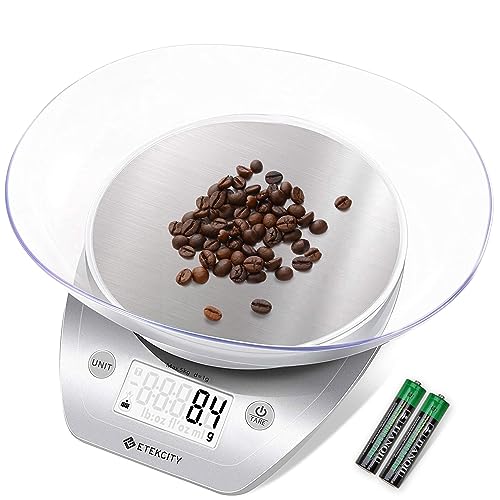
A scale is the cheapest way to make your cooking repeatable. Volume measures lie: a cup of flour can vary by thirty grams depending on how you scoop it, which is the difference between a tender loaf and a dense one. Weighing also means fewer dishes, because you can zero the scale between ingredients and build everything in one bowl. Look for a flat surface with no raised rim, since a rim makes wiping it down harder, and a display that stays readable when a wide bowl is sitting on top of it.
Best for: Anyone who bakes, or who wants the same result twice
Why it made the list: It is the cheapest item here and it changes the most
Keep in mind: The auto off timer is what people find annoying. Look for one that stays awake for at least two minutes.
2. An instant-read thermometer

An instant-read thermometer removes the last real source of anxiety in home cooking, which is not knowing whether meat is done. Cutting into a chicken breast to check is exactly what makes it dry. A decent probe reads in a few seconds and is accurate to about a degree, and it is useful well beyond meat: bread, custard, frying oil, and reheated leftovers all have a temperature worth aiming at. Under twenty five dollars you will not match the speed of the expensive models, but you will get the accuracy, and accuracy is the part that matters.
Best for: Anyone who cooks chicken, pork, or steak and currently guesses
Why it made the list: It replaces guessing with a number, for very little money
Keep in mind: Budget probes are slower. Give it a few seconds and resist pulling it out early.
3. A thin flexible fish turner

This is a slotted spatula with a thin, angled, flexible blade, and it is the reason restaurant eggs come out of the pan intact. The thin front edge slides under delicate food instead of tearing it, which matters for fish, fried eggs, pancakes, and anything that has started to stick. It is also the best tool for scraping browned bits off the bottom of a pan. Most home kitchens have a thick, stiff plastic spatula doing this job badly. Replacing it costs very little and you notice the difference immediately.
Best for: Anyone who cooks eggs, fish, or pancakes with any regularity
Why it made the list: The thin edge does something a standard spatula physically cannot
Keep in mind: It is not built for heavy lifting. A full burger or a dense casserole portion will bend it.
4. A meat chopper and masher

Breaking up ground meat with a wooden spoon leaves you with lumps and an uneven cook. This tool is a set of blunt blades on a handle that breaks the meat apart evenly in a fraction of the time, and it does it without scratching a non-stick pan. It doubles as a masher for potatoes, squash, and apples, which is what saves it from being single-purpose. If you cook mince more than once a week, it earns its drawer space quickly.
Best for: People who cook a lot of mince, chili, bolognese, or tacos
Why it made the list: It does one job noticeably better than the tool most people substitute
Keep in mind: If you rarely cook ground meat, this is exactly the kind of gadget that ends up at the back of the drawer.
5. Magnetic measuring spoons

A measuring spoon set is not exciting, but the magnetic double-ended version fixes two real irritations. The spoons cling together so a single one does not vanish into a drawer, and the narrow oval end actually fits into a spice jar, which the round ones never do. Sets that include a leveler take the guesswork out of a level teaspoon. It is a few dollars for something you touch nearly every time you cook.
Best for: Anyone who bakes or cooks from recipes rather than instinct
Why it made the list: It removes a daily small frustration for almost no money
Keep in mind: The magnets weaken with time and dishwasher heat, and the printed markings on cheaper sets wear off. Look for engraved measurements.
6. A silicone baking mat

A reusable mat does the job of parchment paper without the ongoing cost, and it gives a consistently non-stick surface that helps baked goods brown evenly underneath. For cookies especially, the difference between a bare metal tray and a mat is the difference between burnt bottoms and even ones. One mat replaces a lot of paper over its life, which is the whole argument for it.
Best for: Regular bakers, and anyone tired of buying parchment
Why it made the list: The cost pays back quickly and the results are more consistent
Keep in mind: Silicone absorbs oil smells over time, and a mat will never crisp the underside of something the way bare metal will. Keep the tray for roasting.
7. A handheld milk frother

This is the least necessary item on the list and one of the most used, which is a combination worth noting. A battery powered whisk turns milk into foam in about twenty seconds, which makes home coffee, matcha, and hot chocolate feel like a deliberate thing rather than a rushed one. It also mixes protein powder and salad dressing without lumps. It costs less than two coffees out.
Best for: Anyone with a daily coffee or matcha routine
Why it made the list: It is genuinely cheap and gets used almost every morning
Keep in mind: It aerates milk, it does not steam it. The texture is foam rather than the dense microfoam an espresso machine produces.
8. A jar opener
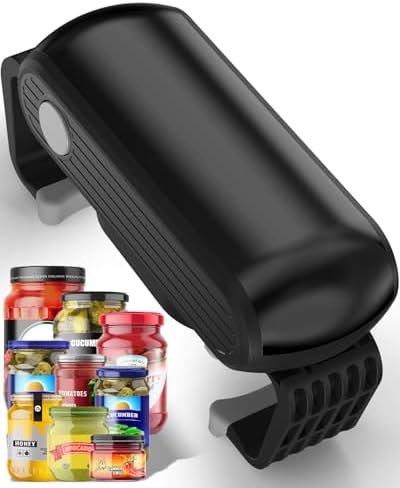
A vacuum sealed lid is a small daily humiliation, and it is a genuine barrier for anyone with reduced grip strength or arthritis. A grippy pad, an adjustable twist opener, or an under-cabinet mounted version all solve it, with the under-cabinet type requiring no grip at all. This is also one of the most useful gifts on the list, because the people who need it most rarely think to buy it.
Best for: Anyone with weak grip, arthritis, or a stubborn pantry
Why it made the list: It solves a problem that has no good workaround
Keep in mind: The under-cabinet type has to be screwed in, so it is not an option in a rental where you cannot drill.
9. A proper pair of kitchen shears

Kitchen shears do a surprising number of jobs faster than a knife: spatchcocking a chicken, trimming fat, cutting herbs straight into a pan, opening stubborn packaging, and portioning pizza. Most people use a dull pair of household scissors for this and conclude that shears are not very good. A real pair with heavy blades and a spring is a different tool entirely.
Best for: Everyone, honestly
Why it made the list: It replaces a knife for several awkward tasks and does them faster
Keep in mind: Only buy a pair that comes apart at the hinge. Shears that do not separate are almost impossible to clean properly, which makes them a hygiene problem with raw chicken.
10. A clip-on silicone strainer
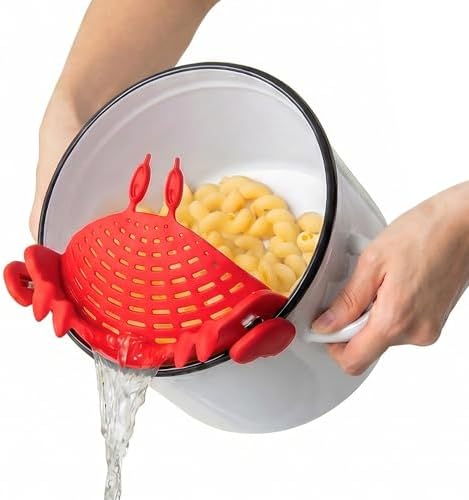
A full-size colander takes up an absurd amount of cabinet space for something used two minutes at a time. A clip-on strainer snaps onto the rim of a pot and lets you drain pasta, vegetables, or mince straight from the pan, then stores flat in a drawer. In a small kitchen this is the difference between a shelf that closes and one that does not.
Best for: Small kitchens, and anyone who hates washing a colander
Why it made the list: It does the same job in a fraction of the storage space
Keep in mind: It grips standard pot rims well but can be hit or miss on very thick or unusually shaped ones. Check your largest pot before committing.
11. A garlic press or garlic rocker

Both do the same job with different trade-offs. A press gives you a finer mince with less effort and gets more out of each clove. A rocker is faster to rinse and has no small holes to clear, which means it is more likely to stay in use. If you cook with fresh garlic more than twice a week, either one saves real time and keeps your hands and board from smelling for the rest of the day.
Best for: Anyone who uses fresh garlic regularly rather than occasionally
Why it made the list: It removes the most annoying two minutes of a lot of recipes
Keep in mind: A press is a genuine nuisance to clean if you do not rinse it immediately. Choose the rocker if you know you will not.
12. A mandoline slicer

Uniform slices cook evenly and look better, and a mandoline does in thirty seconds what careful knife work takes ten minutes to do. For gratins, salads, and anything layered, it is the single biggest visual upgrade available at this price. Look for an adjustable thickness dial rather than one fixed setting, a hand guard that actually holds food securely, and non-slip feet so the board does not travel.
Best for: Cooks who slice a lot of vegetables and want even results
Why it made the list: Nothing else in this price range saves as much time on a repeated task
Keep in mind: This is the one genuinely dangerous item here. The blade is extremely sharp and mandoline injuries are common. Use the hand guard every single time, including the last few slices, which is when almost everyone gets cut.
The one we would skip
The multi-blade vegetable chopper
This is the box with the interchangeable grids that you push an onion through, and it is the best selling kitchen gadget in this price range by a wide margin. It is also the one that most often ends up at the back of the cupboard, and the reason is not the chopping. Pushed through a sharp grid, a firm vegetable comes out in neat dice, and for a minute it feels like a magic trick.
The problem is everything around that minute. The grids clog with anything soft, so tomatoes, mushrooms and cooked potato smear rather than cut. Each grid then has to be poked clean with the little tool that comes in the box, and the base catches juice that has to be rinsed out before it stains. For one onion, that is more washing up than a knife and a board, and one onion is what most weeknight cooking involves. The lid hinges are the first part to fail, usually within a year.
Where it earns its place is volume: a dozen onions for a batch of stock, or a crate of peppers for the freezer. If that is your cooking, buy it. For everyone else, ten minutes of knife practice and the mandoline above cover the same ground with less to clean, and the mini food processor in our time-saving guide is the better buy when you really do want a machine.
Frequently asked questions
What is the most useful kitchen gadget under $25?
A digital kitchen scale. It costs less than most of the other items here and it changes more of your cooking, because weighing makes results repeatable and means fewer dishes. If you only buy one thing from this page, buy that.
Are cheap kitchen gadgets worth buying?
Cheap is fine, flimsy is not. At this price the things that matter are a blade or surface in a decent grade of stainless steel, no cavities you cannot clean, and a job you already do often enough to be annoyed by it. Every item above passes those three checks. Most of the gadget aisle does not.
Which of these should I buy first?
Scale, then thermometer, then shears. Together they cost less than a mediocre frying pan and they fix the three things that make cooking feel harder than it is: measuring, knowing when meat is done, and awkward cutting jobs.
How do I know if a gadget will actually get used?
Ask how it comes apart for cleaning, and whether it beats the tool you already own. Cleaning difficulty is the single best predictor of whether a gadget survives its first year, ahead of price or brand. If it is harder to wash than the knife it replaces, it will quietly stop being used.
What to buy first
Start with the scale and the thermometer. Neither is exciting and both will change your results within a week, which is more than can be said for anything that trends. Add the shears when you next find yourself hacking at packaging with a knife.
After that, buy from this list in the order you notice the annoyance it fixes, not in the order it appears. A gadget bought for a problem you do not yet have is how drawers fill up in the first place.
More guides worth reading
- Kitchen Gadgets That Actually Save Time (Cleaning Included)
- Viral Kitchen Gadgets Tested: Worth It or Not? (10 Verdicts)
- 15 Kitchen Gadgets You Didn’t Know You Needed (And 1 to Skip)
Since the scale is the first thing on this list, we wrote a full kitchen scale buying guide with five picks for different kitchens.
The thermometer on this list has its own full guide now: the best instant-read thermometer for home cooks.